

What is Website Optimisation?
Website optimisation is the method of making your website more appealing to search engines as well as real people. This can be accomplished in several ways depending on your company's needs.
The first step is to establish what your goal is. This will be contingent on the nature of your business however it should be clear and quantifiable.
Content Delivery Network (CDN).
A content delivery network (CDN) is a group of servers that work together to deliver websites to users at high speeds. The servers are located in a variety of locations around the globe known as points of presence. They cache copies of websites and media files so they can be served to users more quickly than if the data was directly from the website's origin server. This helps reduce the burden on the original website and provides an improved user experience for your customers.
A reputable CDN provider will offer various services to help you improve your website's performance and effectiveness. These include caching, web hosting and optimization of websites. These services are essential for getting the speediest loading time possible for your website. They can also help you control traffic and ensure that your website is accessible during peak times.
Online shoppers expect a quick and reliable experience. Poor website performance can lead to frustrated users, lost sales and brand loyalty. Amazon and Google conducted a study that found a site's conversion rate decreases by 7 percent when the page load time is more than 3 seconds to load. Google has announced that websites that load slowly will be penalized by mobile users.
A CDN can help reduce your bandwidth costs, in addition to accelerating content delivery. A CDN can serve dynamic content, which requires more resources than static content. A CDN can also handle a greater amount of traffic than an origin server.
Certain CDN providers offer real-time analytics for websites that track and report on metrics for the site. This lets web and application developers to improve the content they offer users and make informed choices about marketing and customer acquisition. They can also help to defend web applications against attacks by identifying DDoS attacks and reducing their severity.
A CDN can enhance the user experience on any website. However, it's particularly beneficial for businesses with a wide geographical reach or web applications with a lot of resources. Sites that load slowly are the most significant threat to these companies, so a CDN is an ideal solution.
Sitemaps
Sitemaps are a crucial component of optimisation of websites. They aid crawlers to find and index pages of a website. However, they shouldn't be used to substitute for keyword optimisation and other SEO techniques. A sitemap is one of the most effective methods to get high rankings in search engines.
A sitemap is an HTML or XML file which contains the URLs for all your website pages. It can be XML or HTML. XML sitemaps are designed for robot use and HTML sitemaps are made for human users. XML sitemaps are structured lists of information contained within standard tags, which create an outline of key-value pairs. HTML sitemaps are graphical hyperlinks that are displayed on the page and are designed to help users navigate.
XML sitemaps can also indicate to search engines which websites are more important in comparison to others. This allows them to browse your site more quickly and effectively. Furthermore, you can define the importance of each page. However it is not recommended to include URLs that redirect to canonical versions of other URLs, because it could cause confusion for Google. Additionally it is not recommended to add duplicate content to your XML sitemap.
Google Search Console should receive the sitemap in order to ensure it is properly indexed. This is particularly crucial for websites that sell products, as it will help them identify problem pages and fix them. For instance, if you have a category with multiple pages for the same product, you should remove these from your XML sitemap and mark them as "noindex and follow." This will stop Google from wasting its crawl resources on duplicate content. It is also recommended to keep the size of your XML sitemaps as small as possible. Large sitemaps will take longer to load and slow down your website. Additionally they are often difficult to maintain.
Schema Markup
Schema markup assists search engines better comprehend your content. It's used to label your site's pages with structured data. This allows Google and other search engine to show rich snippets of content within organic results. This can boost your click-through rates and even aid in ranking higher in SERPs.
It's simple to include schema markup on your website. Use a schema tagging program and select the type of data you'd like to markup. You can then copy and paste the microdata into your CMS or source code, depending on the way you manage your website. Some tools allow you to look at the HTML while others will show the proper syntax.
There are several types of schema markup. It is crucial to choose the right one for your page. If you choose the wrong schema on a recipe page for instance inaccurate information may be displayed. In addition, it's essential to avoid using duplicate data.
There are certain schema types that are essential to most small and medium businesses. For instance, the organization schema lets you combine key details about your company into a knowledge panel that appears on search engine results pages. You can then utilize the schema markup tool to see how your website will appear using the new markup.
Schema SEO will also help your site to be more prominent on voice searches and devices that support voice activation. In fact, a SEMrush study revealed that the majority of answers served via voice searches were marked up by schema in some way. This is why it's essential to optimize your website for voice search.
Schema is a simple and efficient SEO method, but it isn't widely employed. Implementing it will improve your search engine rankings and user experience. It's also a great method to gain an edge on your competition. If you don't have time to do it yourself, you can use an application like Rank Math to do it for you.
Keywords
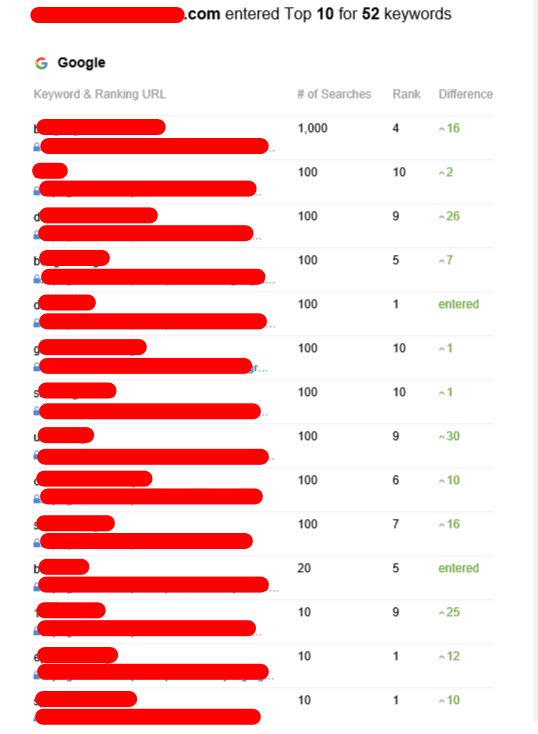
Keywords are the basis of all optimization for websites. They aid search engines in understanding what a page's content is and determine the best way to rank it for related search terms. Keywords are also important for ensuring your content is relevant to your users. Utilizing the appropriate keywords can increase the traffic to your website and increase conversion rates. Choosing the right keywords is not always easy. To optimize for the most efficient keywords, you must take into consideration the intent of the user, search volume, and competition.
Before making any changes to a website it is crucial to conduct tests and audits to identify problems. This will ensure that your new optimization efforts don't harm the user experience or create other issues. Tests can be conducted in areas such as SEO, mobile usability, and speed of your site. You can utilize free testing tools to find potential problems and improve the user experience on your site.
Different types of businesses will have different goals for their websites. seo optimisation london -commerce websites, for example are looking to increase conversions and average order values (AOV). Website owners can use A/B testing to optimize their homepages to meet these goals. This could result in a significant increase in revenue and sales.
To optimize the performance of a website, it's important to consider its structure. SEO on a website can impact everything from the way content is organized to how the navigation of your site is constructed. This is known as on-page SEO, and it can make a an enormous difference in your ranking. Optimizing your on-page optimization could boost your website's rankings by up to 2.6 points in just three days.
One of the best ways to optimize your website is to find keywords that aren't being targeted by your competition. SpyFu is a great tool to use in this regard. This tool allows you to see the keywords that your competitors are focusing on, as well as the ones they're not targeting. It is also possible to determine the keywords driving traffic to websites of your competitors. Once you have identified the keywords driving traffic to the sites of your competitors you can focus on them in your own SEO campaign.